
 Kenono Foundation
Write to us
Kenono Foundation
Write to us
Kenono Foundation
Write to us
Kenono Foundation
Write to us
Kenono works with traditional Naga institutions and customary law to uplift indigenous governance and conservation efforts.
In Nagaland, forest is owned by clans, khels, families, and villages, and is governed by customary law that the Indian Constitution protects.
Article 371A of the Constitution of India holds that no Act of Parliament touching Naga customary law and procedure, the administration of justice according to it, or the ownership and transfer of land and its resources applies in Nagaland unless the State Legislative Assembly decides it should. Of the 8,623 square kilometres recorded as forest in the state, 234 are reserved forest under the Forest Department and 8,389 are unclassed, held and used by communities. Any conservation that is going to last has to be written in the institutions that already hold that land.
Tribal geography is embedded into the administrative capacity in the state of Nagaland.
Each of the state’s sixteen districts is home to a tribe, so the administrative boundary and the tribal territory largely coincide. Tseminyu District is Rengma country and holds forty recognised villages.
The administrative subdivision that government schemes, line departments, and development funds move through.
Villages grouped for planning and delivery, and the level at which neighbouring villages coordinate on things that cross a boundary, forest corridors among them.
The village council, chosen by the villagers according to their own customary practice, with hereditary chiefs and Gaon Buras sitting as members. It formulates development schemes, looks after forest, water, roads, and sanitation, settles disputes under customary law, and no immovable property changes hands without its consent.
The clan ward within the village, represented by its Gaon Buras, who are selected by the clans themselves. This is where land is actually held and worked, and where a project either happens or does not.
| District level | Tribe level |
|---|---|
District levelUnionsAn indigenous body that carries the name of an ancestral village and holds the villages that have grown out of it. Descent, not administration, decides who belongs to which union, which is why a union can speak for a set of villages that no map groups together. |
Tribe levelHohosThe apex community-based organisation for a tribe, which may contain several unions under it. The hoho is where a tribe takes a common position, and the Naga Hoho above it federates tribes across four states. |
We work with the variety of forest governance structures that exist in the Northeast, and consolidate forest decision-making processes in the villages we work in.
Required of every local body under the Biological Diversity Act, the statute that also governs access to biological resources and the knowledge attached to them. The BMC conserves and documents local biodiversity, and the National Biodiversity Authority and the State Board must consult it before decisions on resource use in its area.
More on BMCsForest the village has set aside and governs by its own rules, declared and demarcated by the village institution rather than notified by the state.
More on CCAsThe newer structure Kenono works through, giving a village one body that is accountable for a project end to end, from planning and labour to monitoring and the money that passes through it.
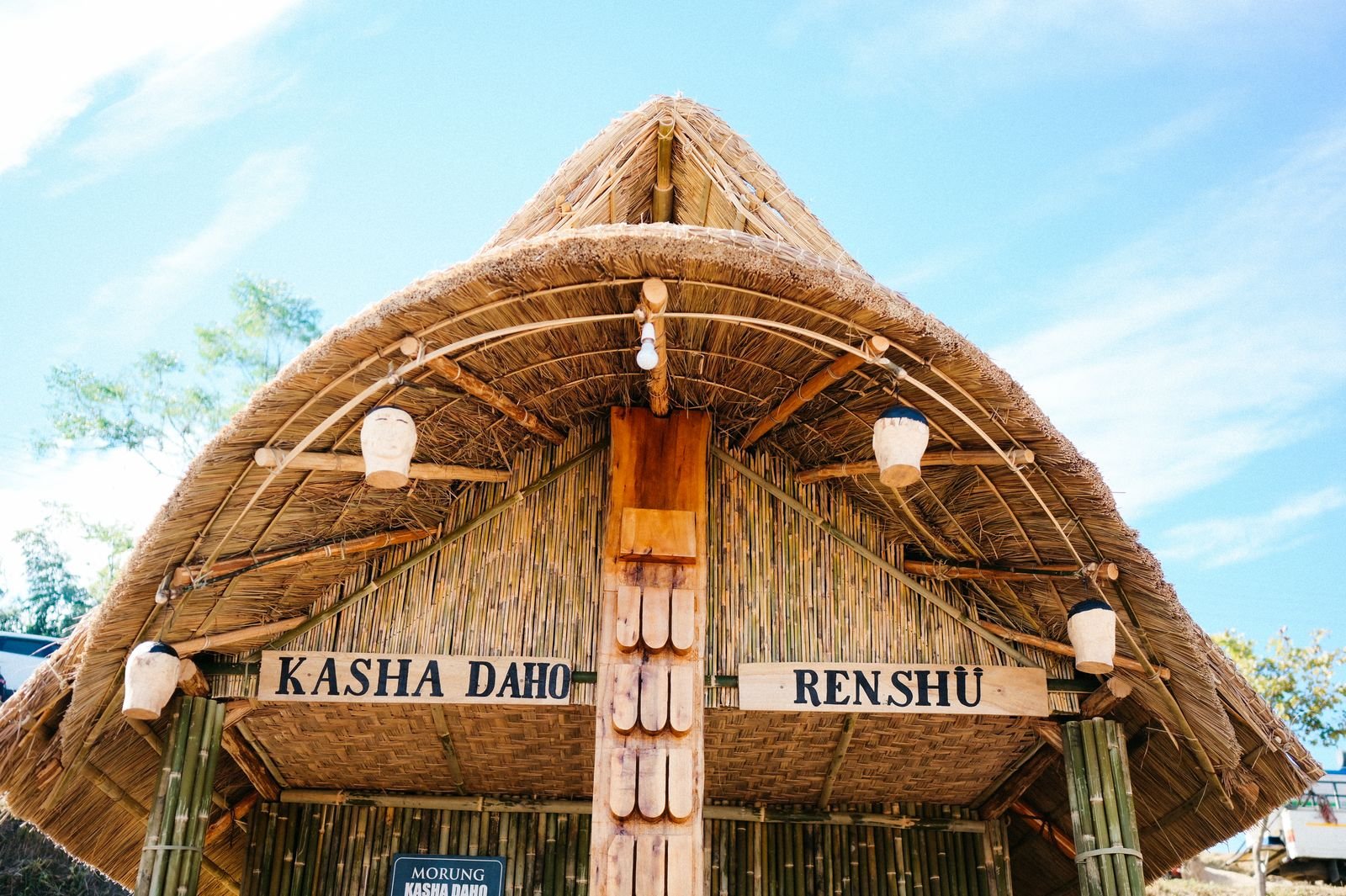
Traditional ways of passing knowledge inform how Kenono upholds and respects customary law.
The morung is the village’s own house of learning, where young people once learned the customs, songs, boundaries, and obligations that still govern land and forest. The institutions Kenono works with are its descendants: the council, the khel, and the committees that carry that knowledge into a project.
Nothing here needs a parallel institution. The work is making the existing ones able to carry a project, and over time to carry more voices.