
The Kenono Story

Come together, and support each other.

Kenono means “come together, and support each other,” which encompasses our ethos and approach.

  • 2022
    Year of founding
  • 128
    Villages covered
  • 12,000ha
    Forest management
Read
I Chapter one

The land

Tseminyu District, Rengma country.

Tseminyu sits on a ridge at 1,261 metres above sea level, the homeland of the Rengma Nagas. The town is the headquarters of a district of 256 square kilometres and forty recognised villages, and 4,260 hectares of forest.

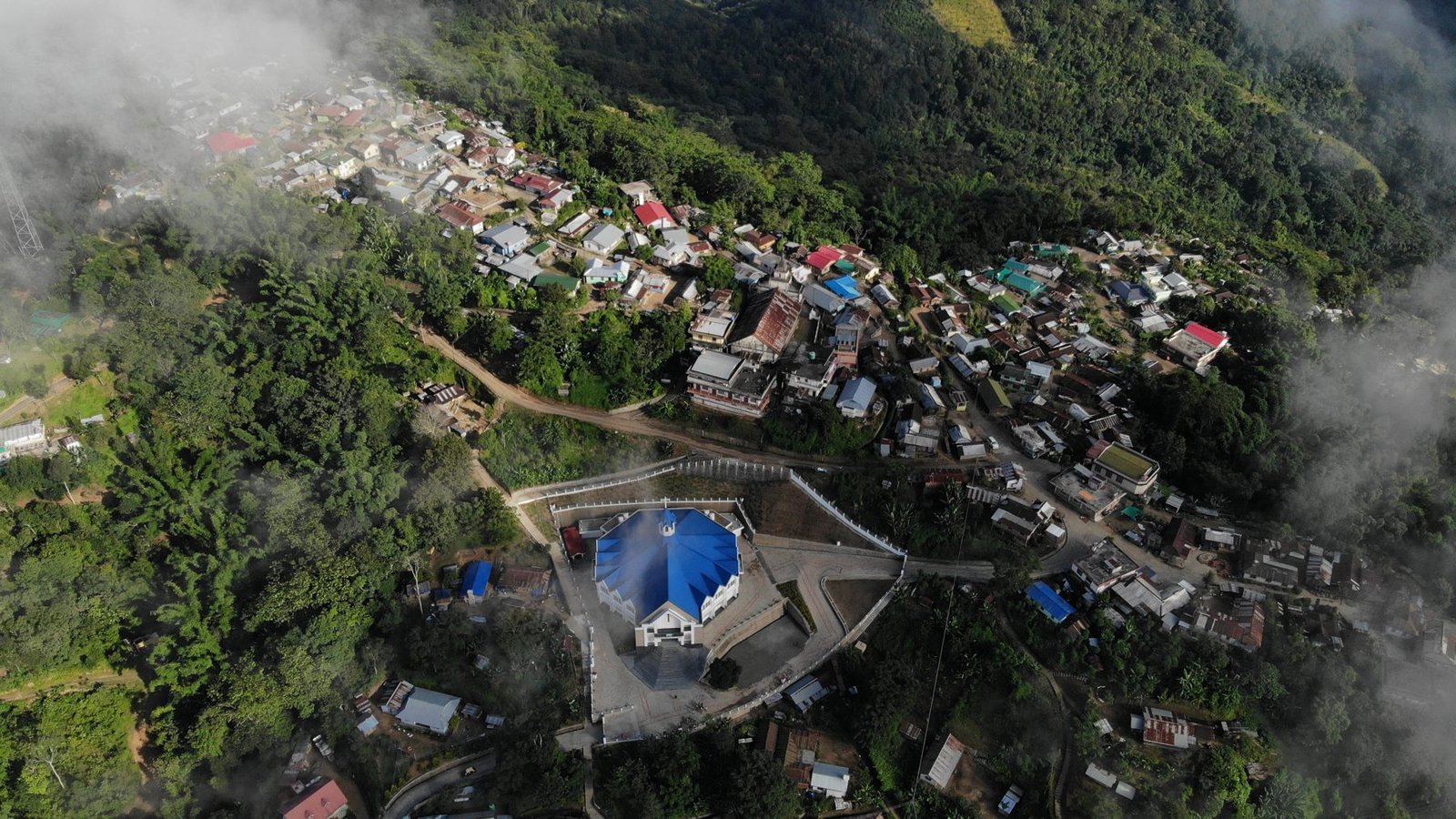
Conservation in Tseminyu District started with the ancestral village of Sendenyu, one of the Rengma villages from which the others on the ridge grew, with a corresponding reserve of 2,000 hectares, managed by a Community Conserved Area (CCA) that predates the creation of the district. That reserve is the ground this story stands on: a village choosing to set forest aside, and the decision holding, long before there was a district to record it.
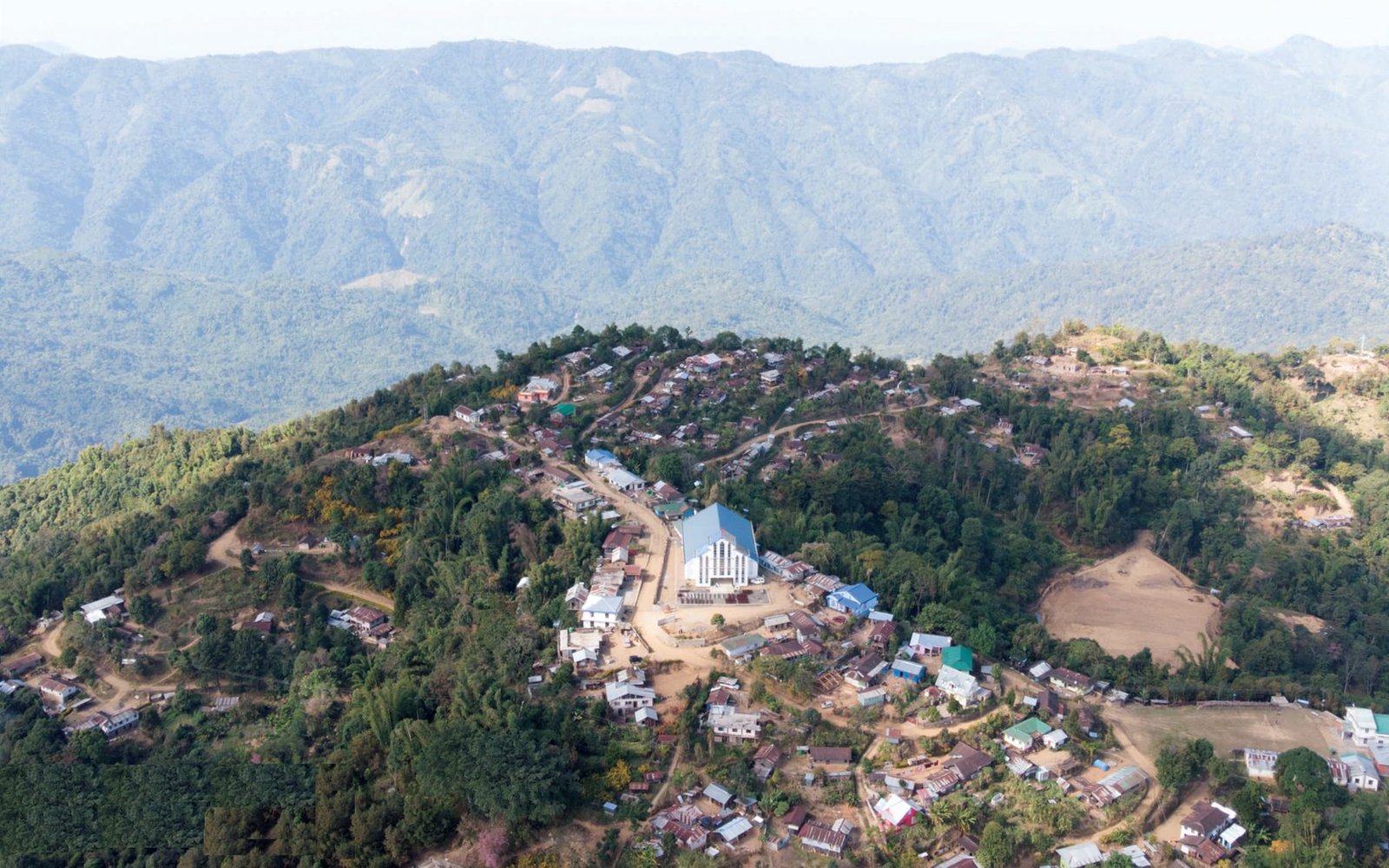
Aerial view of Sendenyu village on a forested ridge, its church and football ground in the centre, with ranges receding into hazeSendenyu, on its ridge
Sendenyu village, its church and football ground, and the ranges beyond it.
A village on a forested slope with a blue-roofed church, seen through low cloud
Tseminyu District

Forty villages, one ridge, and a forest that answers to them.

II Chapter two

A district

Seventy-three years from call to creation.

An elder in a fur headdress with two long feathers, seen in profile in black and whiteAn elder at the festival ground

Tseminyu became an administrative headquarters on June 18, 1948, when the Rengma Bench Court was opened by the Deputy Commissioner of Kohima as a response to the call of the Rengma tribe for a district of their own.

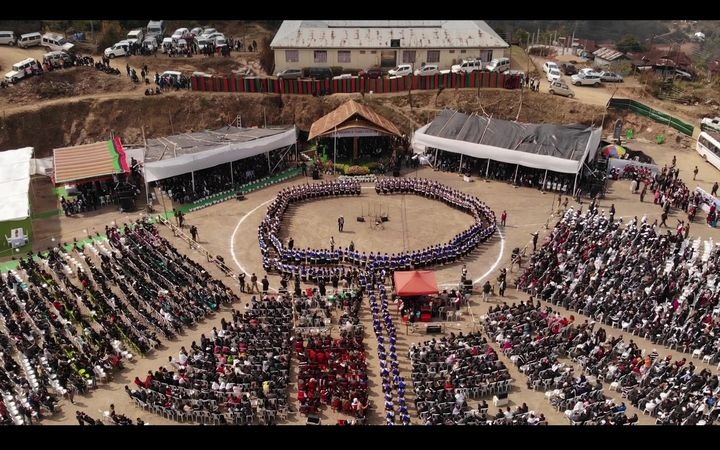
On December 18, 2021, the state of Nagaland finally answered this call. Tseminyu was created as the thirteenth district of Nagaland, carved from Kohima District along the boundaries of the old subdivision, and inaugurated on February 24, 2022.

  1. 194818 June

    Tseminyu becomes a separate administrative headquarters with the Rengma Bench Court.

  2. 1958May

    Raised to a Circle Officer post.

  3. 196319 April

    An Assistant Commissioner posted, the year Nagaland becomes a state.

  4. 198126 January

    Sub-Divisional Officer (Civil) headquarters under Kohima District.

  5. 199118 June

    Additional Deputy Commissioner headquarters.

  6. 202118 December

    Tseminyu is created as the thirteenth district of Nagaland, with the boundaries of the old subdivision.

  7. 202224 February

    The district is inaugurated. Two weeks earlier, on February 9, Kenono Foundation is registered.

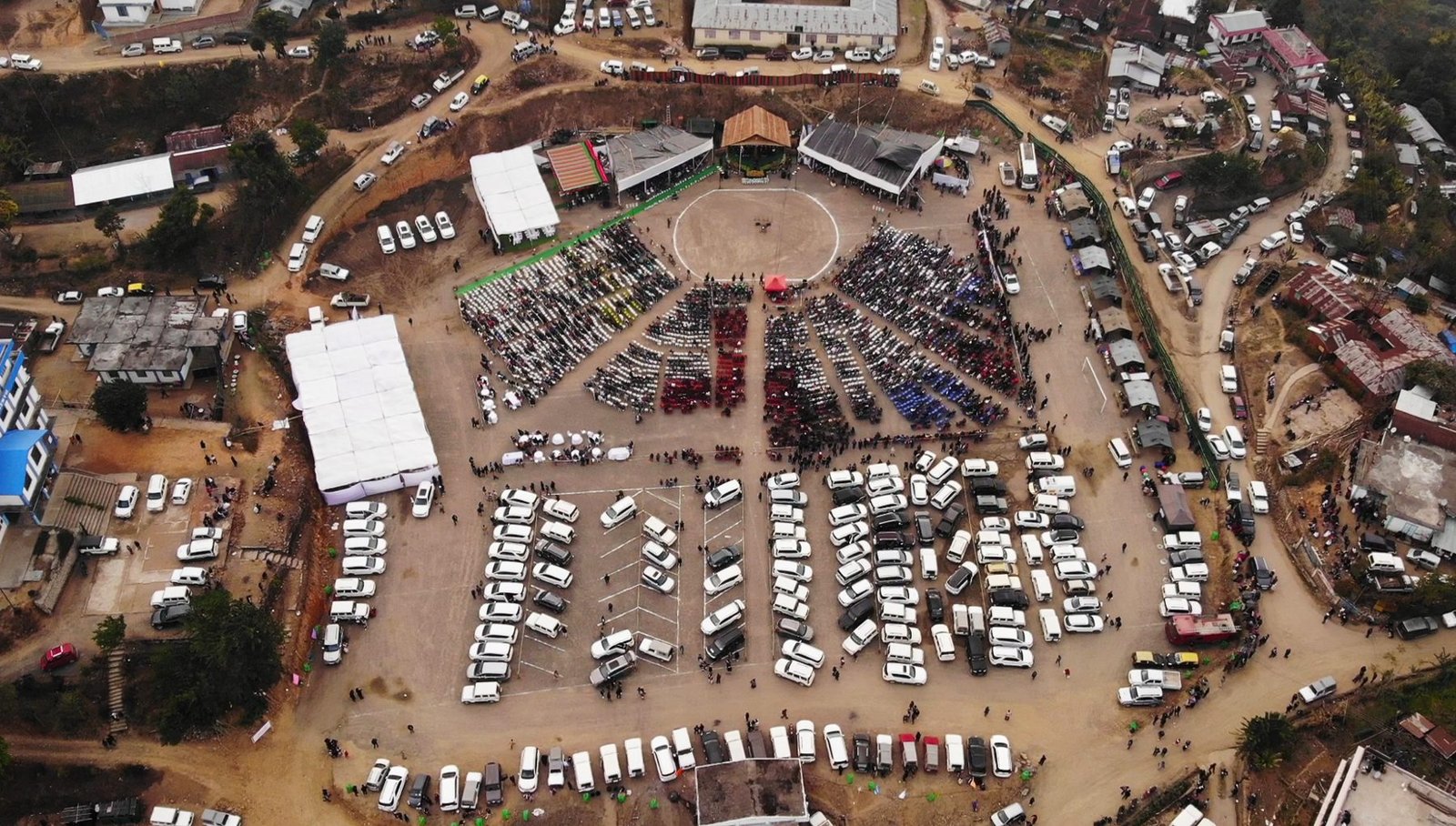
Aerial view of a crowd seated in blocks around a festival ground in Tseminyu, ringed by parked vehicles
Tseminyu District inauguration ceremony

A place that took seventy years to be created arrived with a crowd.

III Chapter three

The return

A community calls one of its own home.

Ruchinilo Kemp, a member of the Rengma tribe, from the ancestral village of Sendenyu, left Nagaland to study and work, before being called back to help with the revival of development initiatives in Tseminyu District.

Ruchi completed a master’s degree in Development Studies at IIT Guwahati. He then worked as a State Bank of India (SBI) Youth for India Fellow in Rajasthan, where he helped connect farmers with agricultural experts, and found that engaging with communities was his calling. He spent the next five years with Seva Mandir in Rajasthan. In 2020, the Rengma community asked him to come back to Tseminyu and give professional direction to Zunpha Multipurpose Cooperative Society Ltd., the town’s cooperative.

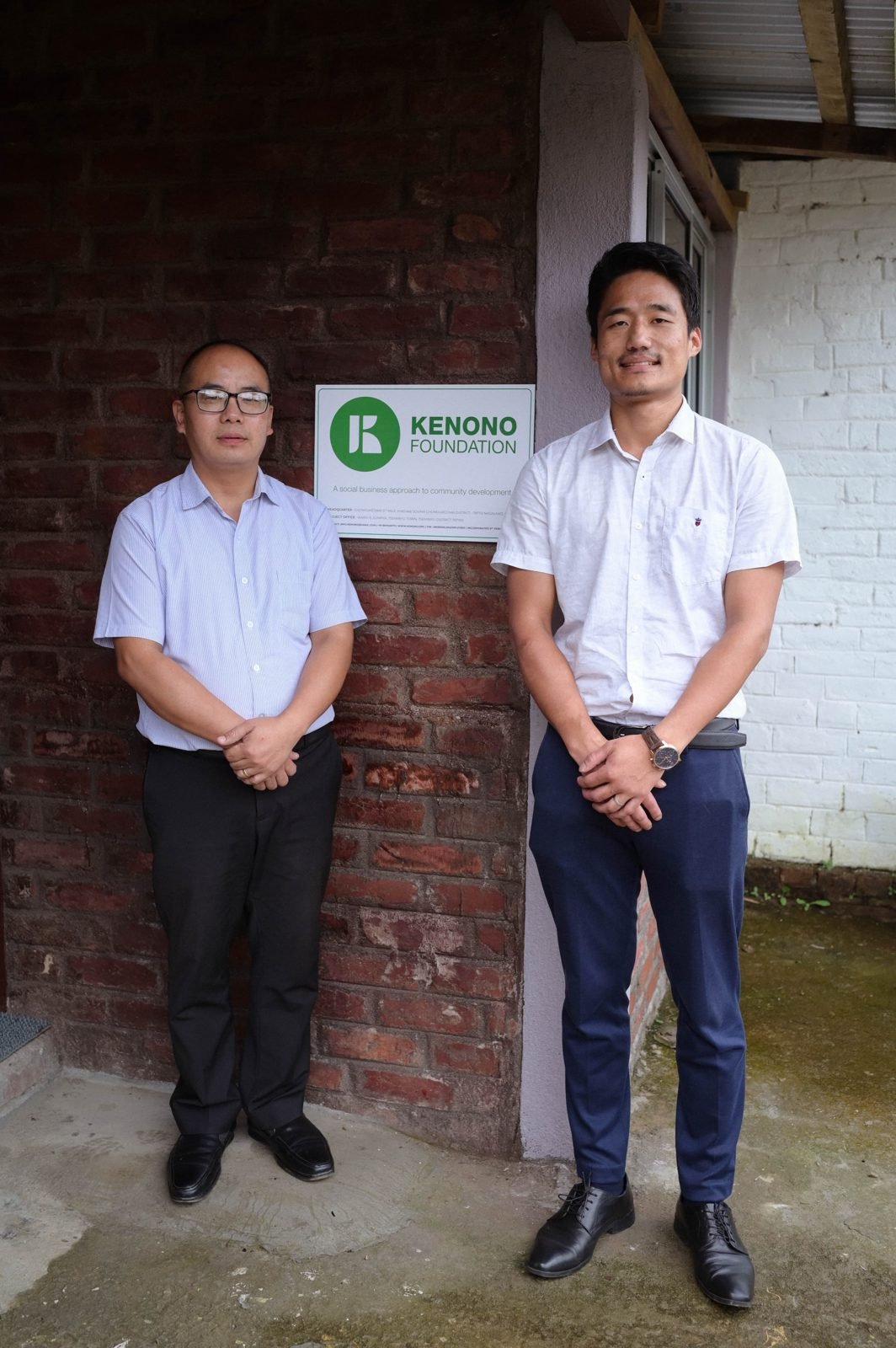
Haiwalo Apon and Ruchinilo Kemp standing either side of the Kenono Foundation sign on a brick wallHaiwalo Apon and Ruchinilo Kemp
Haiwalo Apon and Ruchinilo Kemp at the Kenono Foundation office, Zunpha.
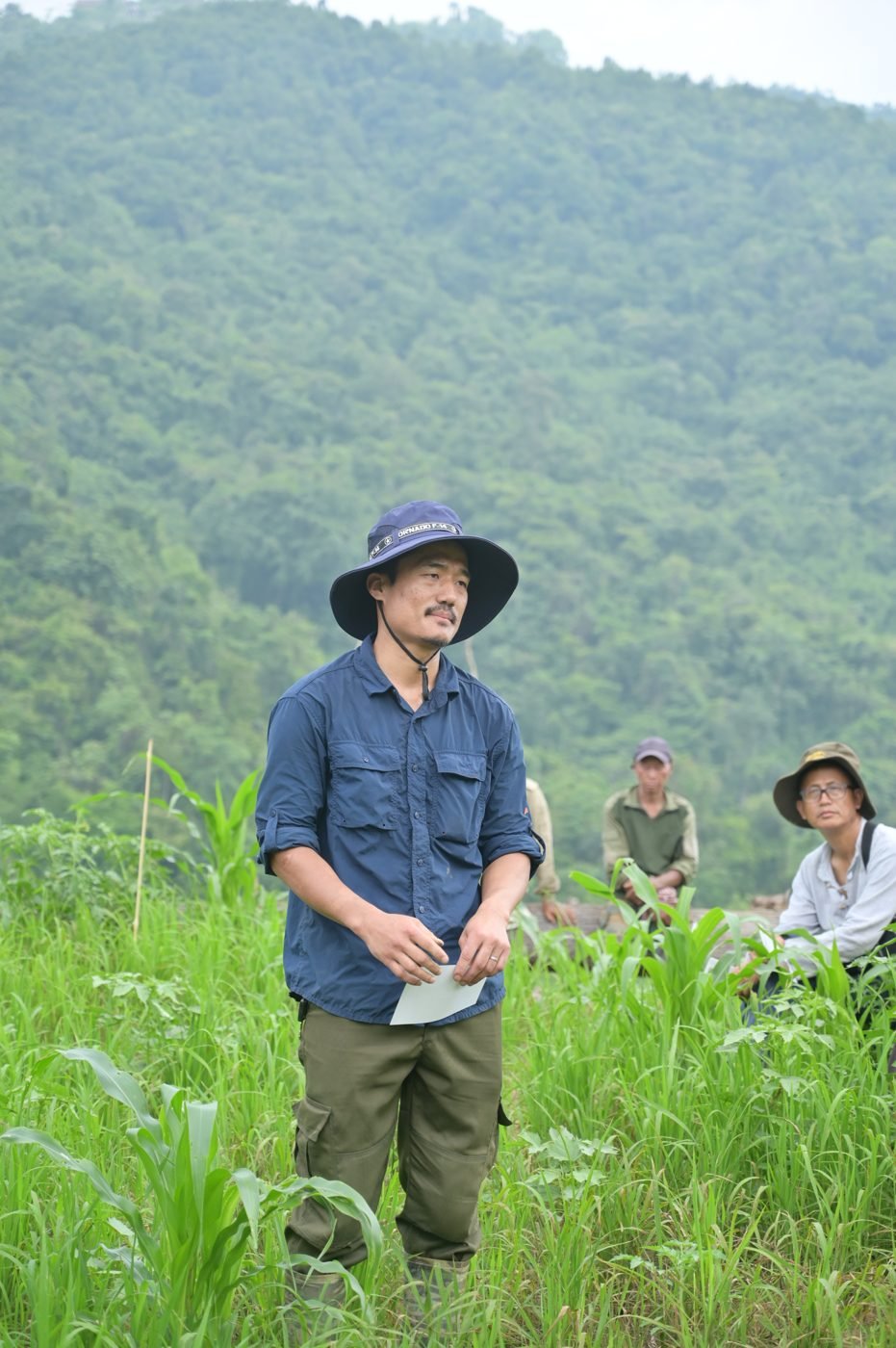
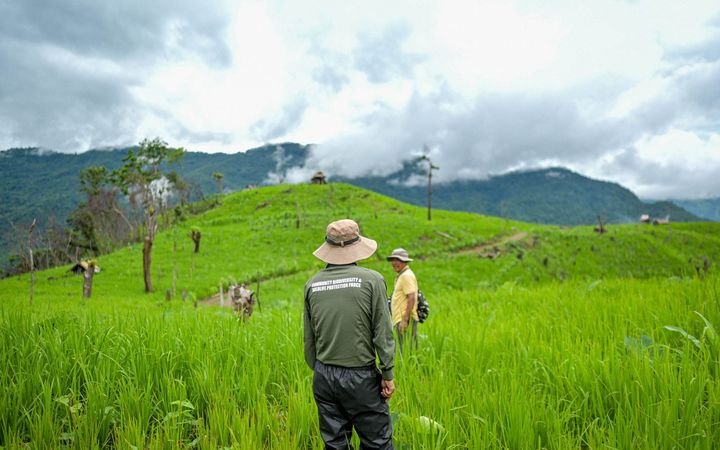
Ruchinilo Kemp in a wide-brimmed hat standing in tall grass, forested hills behind him

If you are to work on the environment and conservation, one person alone cannot do it. Everyone has to come together.

Ruchinilo KempCo-founder, Kenono Foundation. Speaking to YourStory, 2025
IV Chapter four

The Foundation

Establishment of Kenono as a call from the community.

Three young men climbing a tall bamboo pole against a blue sky, one standing on another's shouldersThe pole climb, festival ground

Kenono Foundation was registered on February 9, 2022, as a not-for-profit company under Section 8 of the Companies Act, founded by Ruchinilo Kemp and promoted by Zunpha MPCS Ltd.

The response was to what the founders could see from the ridge: biodiversity thinning, and community conservation fragmenting into single-village efforts with no structure between them. Kenono started with a community conservation plan for the district drawn up with the Rengma Village Council Chairmen’s Forum, a survey of every coffee grower in the district that became a coffee value chain, and the mobilisation of a community ecotourism board in Sendenyu.

Currently, the Foundation works in five Community Conserved Area (CCA) landscapes, covering about 12,000 hectares and 128 villages. Our work spans landscape restoration and community-owned carbon finance, the village institutions that conserve forest, cooperative enterprise, biodiversity education, and the documentation of indigenous knowledge, from Tseminyu across five districts of Nagaland and into Karbi Anglong in Assam.

V Chapter five

What we hold to

Vision, mission, and the line that joins them.

Vision

Communities and nature flourishing together across generations.

Mission

We work with communities to conserve biodiversity, strengthen local institutions, build community enterprises, and shape resilient futures.

Approach

Community stewardship through community enterprise.

Our model and theory of change
Our work